How to Clean Sex Toys Safely?

Time:2026-09-20 Author:Oliver
0%

Sexual wellness products are intimate devices, not automatically sterile. The World Health Organization reports that more than one million curable STIs are acquired daily worldwide. That figure does not measure sex-toy transmission. It does show why basic hygiene deserves careful attention. How to clean sex toys safely depends on material, design, and intended use. Porous elastomers can retain residue. Nonporous silicone, glass, and stainless steel are usually easier to clean. Read the manufacturer’s instructions before water touches a motor, charging port, or seam.

A peer-reviewed study published in Sexually Transmitted Infections detected HPV DNA on some vibrators after cleaning. The sample was small, and DNA detection did not prove transmission. Still, the finding supports cautious routines. The CDC’s STI Treatment Guidelines emphasize barrier methods and avoiding shared items when bodily fluids may be exchanged. NHS sexual-health guidance similarly recommends washing toys after use and using condoms when sharing. These recommendations are practical, not dramatic.

A safe routine usually starts with clean hands, lukewarm water, and mild unscented soap, when the maker permits it. Scrub textured areas gently. Rinse every crease. Dry completely with a clean, lint-free towel before storage. Never immerse a battery-powered toy unless it is rated waterproof. Do not assume “water-resistant” means submersible. Replace damaged surfaces. Tiny cracks matter. A condom can add protection, but it cannot repair a torn coating. We may not always know a product’s exact material, especially with older or unbranded toys. That uncertainty deserves honesty. This guide will compare cleaning methods, sharing risks, storage, and warning signs, using manufacturer instructions and public-health evidence rather than guesswork.
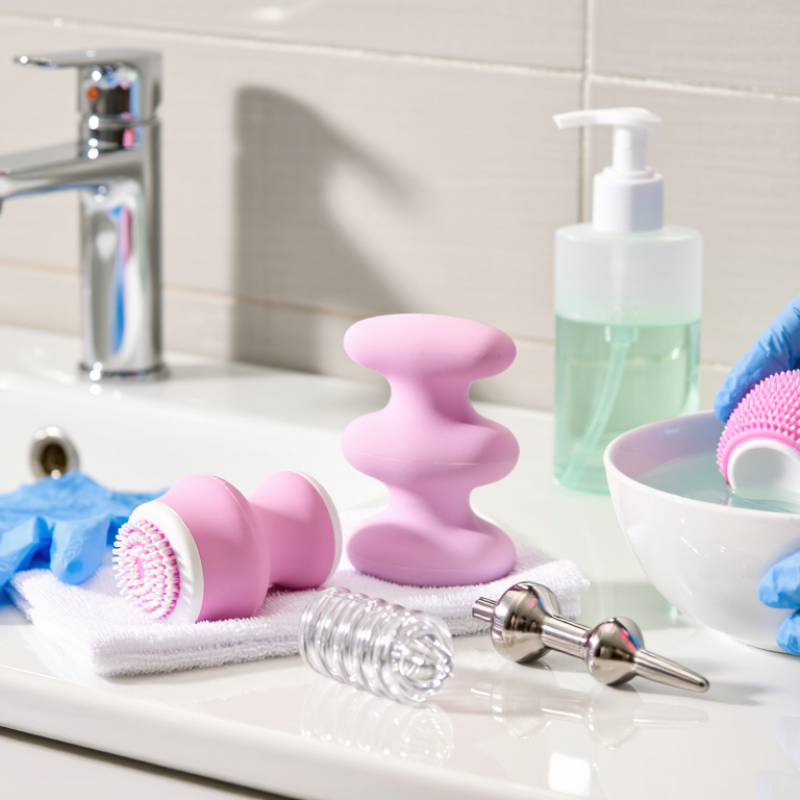
How to Clean Sex Toys Safely?

Understanding Toy Materials and Cleaning Requirements

Material determines how safely a sex toy can be cleaned. Nonporous materials, such as body-safe silicone, ABS plastic, glass, and stainless steel, have smoother surfaces that resist moisture and residue. Wash them with warm water and mild, unscented soap. Use a soft cloth around grooves. Rinse thoroughly, then dry completely before storage.

Porous materials include TPE, TPR, jelly rubber, and some PVC blends. Their microscopic spaces may retain fluids, even after careful washing. A condom barrier can reduce contact with these surfaces, especially when toys are shared or used between body areas. Replace damaged or sticky toys. That small change matters.

Water resistance is not the same as waterproofing. Keep battery compartments dry unless the instructions clearly allow immersion. Boiling, alcohol, bleach, and scented cleaners can damage surfaces or irritate sensitive skin. I once assumed “waterproof” meant every part could be submerged; that assumption is unsafe. Check the care instructions each time.

The World Health Organization reports more than one million curable sexually transmitted infections are acquired daily worldwide (WHO, 2024). The CDC recorded over 2.4 million reported chlamydia, gonorrhea, and syphilis cases in 2023 (CDC, 2023). These figures do not prove toys cause transmission, but they support careful hygiene and barrier use. When material information is unclear, treat the toy as porous and avoid sharing it.

This chart summarizes generally suitable cleaning options for common toy materials. A value of 1 means the method is generally suitable when the toy has no electronic components; a value of 0 means it should generally be avoided. Always follow the manufacturer’s care instructions, especially for boiling and dishwasher use. Porous materials such as TPE and TPR should not be shared without a condom barrier.

Preparing a Safe Cleaning Area and the Necessary Supplies

How to Clean Sex Toys Safely?

Preparing a Safe Cleaning Area and the Necessary Supplies

Choose a clean, well-lit surface near a sink. Keep the area away from food, pets, and shared towels. Wash your hands before handling the toy. I prefer a fresh, lint-free towel and a separate washcloth. This small separation helps prevent accidental contamination.

Gather lukewarm water, mild unscented soap, disposable gloves, and a soft cloth. Avoid bleach, alcohol, abrasive sponges, and strongly scented products. They may damage materials or irritate sensitive skin. A clean basin can help when the sink feels crowded. However, the basin must be washed before and after use.

Check the toy’s care instructions before adding water. Waterproof designs may be rinsed, but water-resistant items should not be submerged. Keep charging ports, batteries, and control panels dry. If the instructions are missing, use a damp cloth and gentle soap rather than guessing. I once assumed a sealed compartment was waterproof; that was careless. A cautious approach is safer.

Prepare a dry storage container or breathable pouch nearby. Do not place a cleaned toy on a damp bathroom counter. Moisture can encourage odor and microbial growth. Clean the surface again if the toy touches the floor. Replace damaged cloths and discard single-use gloves after cleaning. Keep cleaning supplies separate from cosmetics and household chemicals.

Washing and Disinfecting Sex Toys Step by Step

How to Clean Sex Toys Safely?

Washing and Disinfecting Sex Toys Step by Step

Cleaning begins with the toy’s care instructions. Check whether it is waterproof, water-resistant, or neither. Remove batteries or charging cables before washing. A splashproof toy should never be submerged. That detail matters.

Rinse washable toys under lukewarm water. Apply a small amount of mild, unscented soap. Use clean fingers or a soft cloth around seams and textured areas. Avoid abrasive sponges. They can create tiny scratches where residue collects. Rinse until no slipperiness remains. For nonporous materials, a suitable disinfectant may be appropriate, but follow its label carefully. Boiling, alcohol, or diluted bleach is not universally safe. Heat and chemicals can damage surfaces or leave irritating residue. Never improvise with household cleaners.

Pat the toy with a lint-free towel, then let it air-dry completely before storage. Moisture encourages microbial growth. Store it separately in a clean, breathable pouch or container. Wash toys before and after each use, especially when moving between body areas. A fresh condom can add protection and reduce cleaning demands. Do not share a toy without a new barrier and thorough cleaning. If the surface becomes cracked, sticky, discolored, or odorous, stop using it. Replace it. A common mistake is rushing the drying step. It feels harmless, but it is easy to overlook. Even careful cleaning can miss a hidden seam. When instructions are unclear, choose the gentlest method and seek professional advice.

Drying, Inspecting, and Storing Toys Properly

Drying, Inspecting, and Storing Toys Properly

After cleaning a sex toy, drying it completely matters as much as washing it. Remove batteries or charging cables before cleaning, unless the instructions clearly allow water exposure. Pat the surface with a clean, lint-free towel, then let the toy air-dry in a protected place. Avoid direct sunlight, heaters, and hair dryers, which can damage materials or seals. Moisture can remain around seams and charging ports. Check those areas carefully.

I once rushed this step and stored a toy while it still felt slightly damp. That small mistake made me rethink my routine. A dry surface should feel clean, not sticky or cool from trapped water. Before each use, inspect the toy for cracks, peeling, rough edges, unusual discoloration, or a changed smell. Pay special attention to flexible areas and joins. Porous materials may hold moisture and bacteria more easily, so follow the care guidance for that material. If the surface looks damaged, stop using it.

Store each toy separately in a clean, breathable pouch or container. Keep it away from dust, heat, humidity, and sharp objects. Do not let different silicone items touch if the care instructions warn against contact, since some materials can react and become tacky. Rechargeable toys should be stored according to their charging guidance, while removable batteries are usually best taken out during long storage. A monthly inspection is sensible, though I sometimes forget. Set a reminder. When instructions are unclear, pause and seek reliable guidance from the manufacturer or a qualified sexual-health professional.

How to Clean Sex Toys Safely? - Drying, Inspecting, and Storing Toys Properly

Care Stage Recommended Method Key Details Avoid
Before Cleaning Check the care instructions and identify the toy’s material, controls, and power source. Remove batteries or disconnect power when appropriate. Keep charging ports and electronic openings away from water unless the toy is specifically waterproof. Do not immerse an electronic toy simply because it appears sealed.
Basic Washing Use lukewarm water and a small amount of mild, unscented soap, or use a cleaner made for the toy’s material. Wash all external surfaces and textured areas. Rinse thoroughly so no soap residue remains. Avoid harsh detergents, bleach, alcohol, abrasive cleaners, and strongly fragranced products.
Water Exposure Follow the manufacturer’s water-resistance instructions before rinsing, soaking, or submerging. Water resistance can vary by model. A removable battery compartment or charging port generally requires extra care. Do not soak, boil, or place a toy in a dishwasher unless the specific care instructions explicitly permit it.
Drying Pat dry with a clean, lint-free towel, then allow the toy to air-dry completely in a clean, ventilated area. Pay attention to seams, grooves, creases, and charging areas. Complete drying helps reduce moisture-related odors and microbial growth. Do not store the toy while damp or use high heat, hair dryers, radiators, or direct sunlight.
Inspection Examine the surface, seams, controls, and any removable parts after cleaning and drying. Look for cracks, cuts, peeling, sticky areas, discoloration, unusual odor, corrosion, or exposed wiring. Do not continue using a toy with damaged, degraded, or difficult-to-clean surfaces.
Storage Store the completely dry toy in a clean, breathable pouch or a dedicated container in a cool, dry place. Keep it away from dust, excessive heat, moisture, and direct sunlight. Store batteries separately when appropriate. Avoid sealed plastic bags for damp toys and prevent soft, porous materials from touching other toys during storage.
Between Users Clean the toy before and after each person uses it. A new condom can provide an additional barrier when sharing. Use a fresh condom when changing between body openings, and clean the toy before any further use. Do not rely on wiping alone when body fluids may be present.
Cleaning Frequency Clean after every use and before reuse, even when the toy looks clean. Regular cleaning is especially important for toys used internally, shared toys, and toys that contact bodily fluids. Do not assume infrequent use eliminates the need for cleaning before storage or reuse.
When to Replace Replace the toy if it cannot be cleaned thoroughly or shows signs of material breakdown or electrical damage. If use causes pain, irritation, or an unusual reaction, stop using the toy and seek appropriate medical advice if symptoms persist. Do not attempt to repair damaged body-contact surfaces with household glue or tape.

General rule: When the care instructions for a specific toy differ from this table, follow the product’s instructions. Material, construction, and water-resistance ratings determine the safest cleaning method.

Avoiding Common Cleaning Mistakes and Safety Risks

How to Clean Sex Toys Safely?

Cleaning a sex toy safely starts with its material and power source. Read the care instructions before using water. Waterproof does not always mean fully submersible. A splash-resistant toy can fail in a sink. Remove batteries before cleaning. Keep charging ports dry. If the instructions are missing, choose the gentlest method and avoid guessing.

Use lukewarm water and mild, unscented soap on suitable nonporous surfaces. Rinse away every trace of soap. Residue may irritate sensitive skin. Never use bleach, alcohol, perfume, or harsh household cleaners.

Do not boil a toy unless its instructions specifically allow it. Heat can damage seals, batteries, or soft materials. Porous materials need extra caution because they can retain moisture and bacteria. A condom or other barrier can reduce contact, especially when sharing. Clean the toy before and after each use. Clean your hands too.

Drying is often underestimated. Pat the surface with a clean, lint-free towel, then let it air-dry completely. Damp storage encourages odor and microbial growth. Store each toy separately in a clean, breathable pouch. Avoid sealed plastic bags while moisture remains.

Inspect the surface every time. Cracks, peeling, stickiness, or unusual odor are warning signs.

I used to think a quick rinse was enough, but small seams can hide residue. When something looks damaged, replacing it is safer than trying to repair it.

FAQS

Where should I clean a personal intimate item?

Choose a clean, well-lit surface near a sink. Keep it away from food, pets, and shared towels. Wash your hands first.

What supplies are useful for cleaning?

Prepare lukewarm water, mild unscented soap, a soft cloth, and a lint-free towel. Disposable gloves are optional. Use a separate washcloth.

Which cleaning products should I avoid?

Avoid bleach, alcohol, abrasive sponges, and strongly scented products. They may damage surfaces or irritate sensitive skin. Gentle is safer.

Can every item be submerged in water?

No. Check the care instructions before adding water. Waterproof items may be rinsed, but water-resistant items should not be submerged.

How should I protect charging ports and batteries?

Remove batteries and charging cables before cleaning, unless instructions clearly permit water exposure. Keep ports, battery compartments, and control panels dry.

What should I do if care instructions are missing?

Use a damp cloth with gentle soap instead of guessing. I once assumed a sealed compartment was waterproof. That was careless.

How can I dry the item properly?

Pat it with a clean, lint-free towel. Let it air-dry in a protected place. Avoid heaters, direct sunlight, and hair dryers.

What signs mean I should stop using it?

Inspect for cracks, peeling, rough edges, unusual discoloration, or a changed smell. Stop using it if the surface looks damaged.

How should I store a cleaned item?

Store it separately in a clean, breathable pouch or container. Keep it away from dust, heat, humidity, and sharp objects.

How often should I inspect stored items?

A monthly inspection is sensible. Check seams, flexible areas, and charging ports. I sometimes forget, so a reminder helps.

Conclusion

Learning how to clean sex toys safely begins with understanding their materials, construction, and care instructions. Different surfaces may require different methods, so users should identify whether a toy is waterproof, removable, or battery operated before cleaning. Prepare a clean area with mild, unscented soap, warm water, a soft cloth, and a fresh towel. Wash each toy carefully, paying attention to seams, textured areas, and controls, then disinfect it only with a method suitable for its material and design.

After cleaning, rinse away any residue and dry the toy completely with a lint-free towel before allowing it to air-dry if needed. Inspect it for cracks, discoloration, loose parts, or other signs of damage, since worn surfaces can be difficult to clean thoroughly. Store toys separately in a clean, dry container away from heat, moisture, dust, and direct sunlight. Avoid common mistakes such as using harsh chemicals, soaking non-waterproof devices, sharing toys without proper cleaning, or storing them while damp.

Oliver

Oliver

Oliver is a seasoned marketing professional with a wealth of expertise in driving brand awareness and engagement. With a deep understanding of our company's product offerings, he consistently delivers high-quality content that enriches our professional blog. His insights not only shed light on......