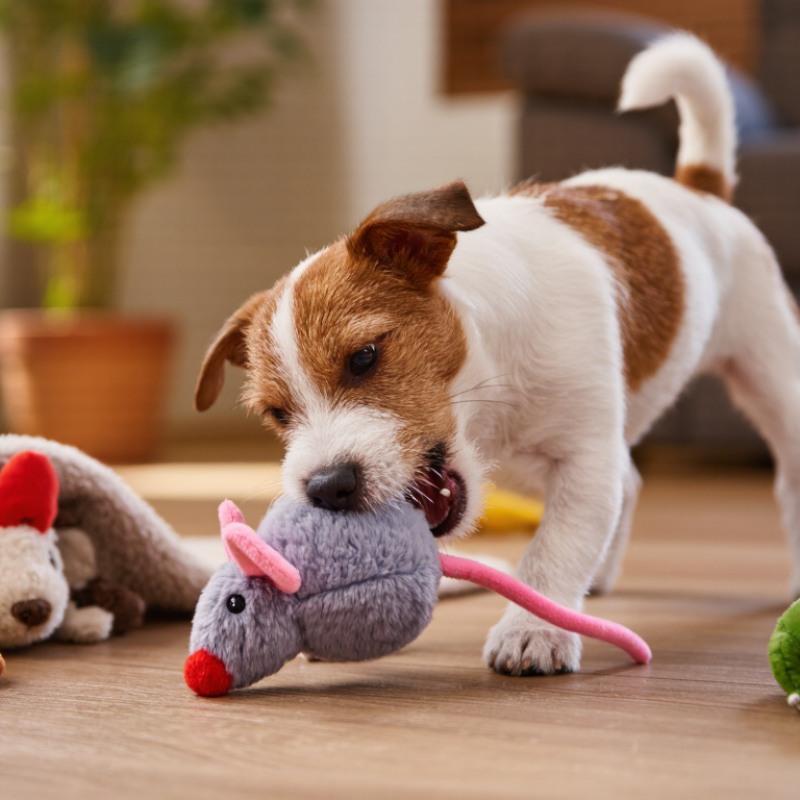
Why do dogs like squeaky toys? The answer combines instinct, sound, movement, and individual learning. A sharp squeak can resemble the cry of small prey, activating behaviors linked to chasing, grabbing, and shaking.
“Many dogs find squeaky toys rewarding because the sound resembles prey vocalizations,” says veterinary behaviorist Dr. Nicholas Dodman. His explanation connects play with canine predatory behavior, although it should not be treated as the complete answer. Dogs also learn that squeezing a soft toy produces an immediate response. That simple feedback can become highly satisfying.
Industry data shows why this topic matters to modern dog owners. The American Pet Products Association’s 2023–2024 National Pet Owners Survey estimated that 65.1 million U.S. households owned a dog. Meanwhile, Grand View Research has reported continued growth in the global pet toys market. These figures suggest strong demand, but sales numbers do not prove that every dog enjoys squeakers.
Real-life observation remains essential. One terrier may attack the toy repeatedly. Another may carry it gently, then hide it beneath a blanket. Some dogs lose interest after the squeak stops working. Others become overstimulated, especially when the sound is constant and piercing.
This guide examines seven practical reasons behind that attraction. It considers prey drive, curiosity, attention, stress relief, play history, breed tendencies, and safety. The evidence is useful, but imperfect. A dog’s personality still matters most. Owners should watch body language, inspect damaged toys, and remove loose parts promptly. The squeak may be fun. It may also become too intense.
What Squeaky Toys Are and How They Work
Why Do Dogs Like Squeaky Toys 7 Key Tips?
A squeaky toy contains a small air valve, usually inside soft rubber or fabric. When a dog bites it, compressed air passes through the valve and creates a sharp sound. That sudden pitch can resemble a small animal’s distress call. It may activate chase, search, and bite behaviors. The toy also gives instant feedback: bite harder, hear a louder squeak. In my experience, some dogs investigate quietly, while others shake the toy across the room. The response is individual.
APPA reported that U.S. pet industry spending reached about 152 billion dollars in 2024. This figure shows how widely companion-animal products are used, but spending does not prove every toy is beneficial.
Tip 1: Watch the first play session. Check whether the squeaker loosens, fabric tears, or stuffing appears. A damaged toy can become a swallowing risk.
Tip 2: Match the toy with your dog’s size and chewing style. A lightweight toy may suit a gentle carrier, not a powerful chewer.
Tip 3: Use squeaky toys in short, supervised games. Rotate them to preserve interest and reduce frantic chewing.
The American Veterinary Medical Association encourages owners to consider toy safety, size, and durability. It is easy to overstate the “prey instinct” explanation. Some dogs simply enjoy control, sound, and owner attention. Others find squeaks stressful.
Remove the toy if your dog guards it, becomes unusually tense, or ignores normal cues. Even careful guidance can miss one detail: your dog’s daily behavior matters more than a label.
How Squeaks Trigger Dogs’ Natural Hunting Instincts
Why Do Dogs Like Squeaky Toys 7 Key Tips?
How Squeaks Trigger Dogs’ Natural Hunting Instincts
A squeaky toy imitates the sharp, sudden sound of small prey. That noise can activate a dog’s chase, bite, and shake sequence. Veterinary behaviorists describe this response as instinctive, but individual dogs react differently. Not every dog.
The American Pet Products Association’s 2023–2024 National Pet Owners Survey estimated that 66% of U.S. households owned a pet, representing about 86.9 million homes. This broad ownership data shows why safe enrichment matters at home. Choose a squeaker with a manageable volume. Watch your dog’s eyes, posture, and breathing. Keep play sessions short. Rotate toys to maintain interest. Inspect seams after every session. Stop play when guarding appears. Reward calm release behavior.
Sound matters. I once assumed louder squeaks created better engagement, but that idea is incomplete. Some dogs become frantic, while others lose interest quickly. A 2023 review in Applied Animal Behaviour Science noted that enrichment works best when it matches an animal’s preferences and behavioral needs. Use supervision, especially with strong chewers. Remove damaged toys immediately. A squeak should encourage controlled play, not constant arousal. Let your dog pause. Observe, adjust, and admit when the toy is simply unsuitable.
Why Do Dogs Like Squeaky Toys? 7 Key Tips: How Squeaks Trigger Dogs’ Natural Hunting Instincts
| Key Tip |
Natural Trigger |
What the Squeak May Encourage |
Useful Guidance |
| 1. Mimics Small Prey |
A high-pitched, sudden sound can resemble the distress call or movement of a small animal. |
Orienting, chasing, grabbing, shaking, and carrying the toy. |
Use the toy during short, supervised play sessions that allow safe chasing and retrieving. |
| 2. Activates Predatory Motor Patterns |
Dogs retain inherited predatory behaviors even when they are well-fed and domesticated. |
A sequence of searching, stalking, pouncing, biting, and shaking. |
Let the dog complete safe parts of the play sequence without encouraging contact with real wildlife. |
| 3. Provides Immediate Feedback |
The sound changes when the toy is pressed, bitten, or moved. |
Repeated biting, pawing, tossing, and interactive exploration. |
Choose a squeak that is noticeable but not distressing for the dog or people nearby. |
| 4. Adds Mental Stimulation |
Unpredictable sound and movement create a simple problem-solving challenge. |
Focused attention, investigation, and active manipulation of the toy. |
Rotate several safe toys to maintain interest rather than leaving every toy available at once. |
| 5. Supports Interactive Play |
The sound helps both the dog and the person notice when the toy is being engaged. |
Fetching, tugging, exchanging, and attention toward the handler. |
Pair play with cues such as “drop” or “leave it,” rewarding calm exchanges instead of forceful grabbing. |
| 6. Can Satisfy Breed Tendencies |
Individual dogs may show different levels of chasing, retrieving, carrying, or dissecting behavior. |
Strong engagement in dogs that enjoy movement, pursuit, or object play. |
Consider the individual dog’s age, size, chewing style, and play preferences rather than relying only on breed expectations. |
| 7. Requires Safe Supervision |
Excitement can lead some dogs to tear open toys and swallow fabric, stuffing, or the squeaker. |
Fast, intense chewing or possession of damaged toy parts. |
Inspect toys regularly, remove damaged items immediately, select an appropriate size, and contact a veterinarian if a piece may have been swallowed. |
Important: A squeaky toy can enrich play, but it does not replace walks, training, social interaction, or other forms of exercise. Dogs that become anxious, unusually possessive, or overstimulated should be given a break and redirected to a calm activity.
Why Sound, Movement, and Texture Keep Dogs Engaged
Why Do Dogs Like Squeaky Toys? 7 Key Tips
A squeak can imitate the sharp sound of small prey, triggering focused listening and quick head movements. Movement adds another reward. When a toy rolls, twists, or suddenly stops, dogs must track it with their eyes and nose. Texture matters too. Soft fabric invites carrying, while rubbery surfaces encourage chewing. The American Pet Products Association’s 2023–2024 National Pet Owners Survey estimated 65.1 million U.S. households owned dogs, showing how widely enrichment choices affect daily care.
Watch your dog’s response rather than assuming every squeaker works equally.
Tip one: choose a size that cannot fit fully inside the mouth.
Tip two: match texture to chewing strength.
Tip three: use short play sessions.
Tip four: pause when excitement becomes frantic.
Tip five: rotate toys to preserve novelty.
Tip six: inspect seams and squeakers frequently.
Tip seven: remove damaged toys immediately.
The PDSA Animal Wellbeing Report 2024 estimated about 11 million dogs live in UK households, making safe, practical enrichment especially important.
A quiet dog may still be deeply engaged. Slow sniffing, careful pawing, and relaxed chewing can show concentration. I used to treat louder play as better play. That assumption was weak. Some dogs prefer a soft crackle over a high-pitched squeak. Others lose interest when sound repeats too predictably. Observe ear position, breathing, body tension, and whether your dog can disengage. A toy should invite curiosity, not create stress. Never leave a powerful chewer unsupervised with a new toy.
How Dogs’ Age, Breed, and Personality Shape Their Preferences
Why Do Dogs Like Squeaky Toys? 7 Key Tips
Dogs often enjoy squeaky toys because the sharp sound resembles small prey. The noise also gives instant feedback when they bite. However, age, breed, and personality strongly shape that attraction. A young terrier may chase and shake a toy intensely. An older retriever may prefer carrying a soft toy quietly. Some dogs simply dislike sudden sounds.
Tips
- Match toy size to your dog’s mouth.
- Choose softer toys for puppies and senior dogs.
- Let cautious dogs investigate without pressure.
- Offer tougher designs to powerful chewers.
- Rotate toys to prevent boredom.
- Watch for swallowed stuffing or damaged squeakers.
- Stop play when excitement becomes frantic.
Supervision matters.
Breed tendencies can guide you, but they never tell the whole story. Herding dogs may enjoy movement and repeated squeaks. Scent-driven breeds might prefer toys hidden under blankets. A confident dog may demand noisy games, while a sensitive dog may retreat after one squeak. Personality often matters more than appearance. I have seen dogs ignore expensive-looking toys and choose a worn, quiet one instead. That observation can challenge simple breed-based advice. Veterinary professionals generally recommend removing broken toys promptly, especially when pieces become loose. Short play sessions can protect older joints and reduce overstimulation. The best choice is safe, washable, and genuinely enjoyable for that individual dog.
How to Choose and Use Squeaky Toys Safely
Why Do Dogs Like Squeaky Toys 7 Key Tips?
Many dogs enjoy squeaky toys because the sharp sound resembles small prey. It can trigger chasing, shaking, and carrying behaviors. The noise also gives immediate feedback when a dog bites. However, not every dog finds it enjoyable. Some dogs become overstimulated, nervous, or possessive. Watch body language, especially a stiff posture, hard staring, or sudden guarding.
Choose a toy larger than your dog’s mouth and throat. Avoid loose parts, weak stitching, and easily separated plastic pieces. Press the toy gently before purchase. It should squeak without cracking or producing sharp edges. Check it before every play session. A damaged toy can become dangerous quickly. Supervise active chewers, even when the toy looks sturdy. No toy is truly indestructible.
Keep sessions short and calm. Let your dog chase the toy, then trade it for a treat instead of pulling forcefully. This can reduce frustration and protect teeth. Store the toy after play if your dog guards it or destroys it. Wash it according to its material and allow it to dry completely. If your dog swallows fabric or a squeaker, contact a veterinarian promptly. I would not assume quiet behavior means safety; some dogs hide discomfort well. Choosing a safer size helps, but careful observation matters more.
Squeaky toys can stimulate a dog's prey-drive response, encourage interactive play, and provide mental enrichment. The safety priorities shown here are practical ratings based on common veterinary and animal-welfare guidance: supervision, correct sizing, regular inspection, durable construction, easy cleaning, and prompt removal when damaged.
Conclusion
Why do dogs like squeaky toys? These toys contain a small sound-making piece that produces a sharp squeak when pressed, creating an immediate response that many dogs find exciting. The sound can resemble the noise of small prey, stimulating natural hunting behaviors such as chasing, grabbing, shaking, and searching. Combined with bouncing movement and varied textures, squeaky toys keep dogs mentally and physically engaged while encouraging interactive play.
A dog’s age, breed, energy level, and personality can shape its preference. Puppies may enjoy softer toys, while active dogs may prefer durable options that withstand frequent chewing. To use squeaky toys safely, choose an appropriate size, inspect them regularly, and remove the toy if it becomes damaged or if any part starts to loosen. Supervise play, especially with strong chewers, and replace worn toys promptly. With thoughtful selection and responsible use, squeaky toys can provide enjoyable enrichment and support healthy play habits.

 Cart Toys